Keeping a Reading Notebook Without Turning It Into Homework
A reading notebook sounds appealing until it starts to feel like an assignment. Page numbers, ratings, summaries, themes, quotations, and monthly goals can quickly turn a quiet hobby into record keeping.
The version that has lasted for me is much simpler. I keep one notebook nearby and write only when a sentence, image, or idea makes me want to stop for a moment.
Write what you want to find again
I rarely summarize a whole book. Instead, I note a few words about why something caught my attention. Sometimes it is a short quotation, sometimes a character detail, and sometimes a question the book raised. A page number beside the note is enough to return later.
This makes the notebook useful months afterward. It does not recreate the book; it points back to the parts that mattered.
Let the pages stay uneven
Some books fill several pages. Others leave no notes at all. That unevenness is part of the record. It shows where attention naturally lingered rather than forcing every title into the same template.
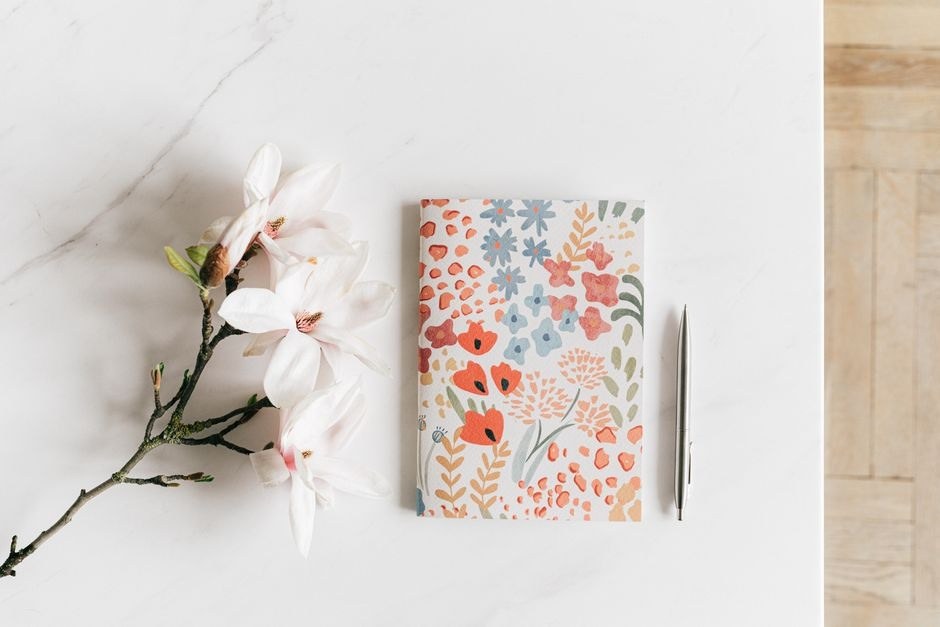
I also avoid decorating every page in advance. A plain notebook, a pen, and occasional loose items such as a ticket or postcard are enough. The visual character develops gradually as the notebook is used.
Return without catching up
If the notebook sits untouched for a month, there is nothing to repair. Start again with the book currently on the table. Skipping entries keeps the practice flexible and prevents a backlog from forming.
Over time, a reading notebook becomes less like a log and more like a collection of conversations with books. That is usually more interesting than a perfectly complete record.